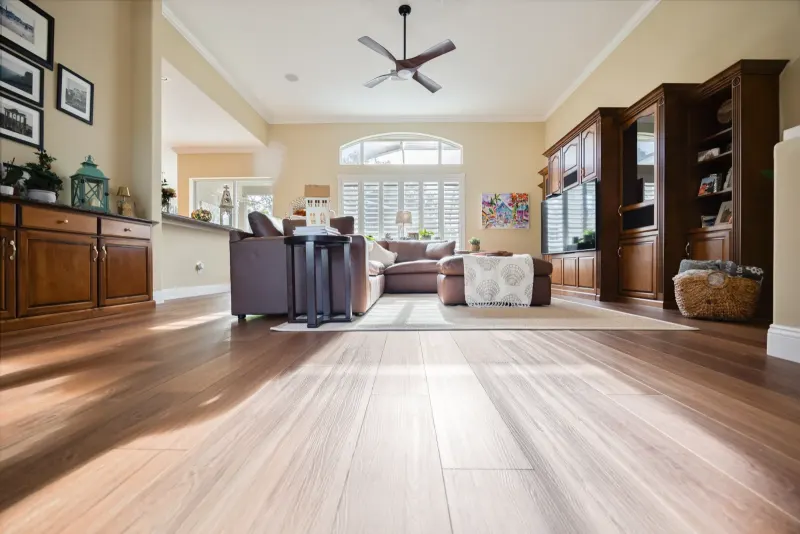

What counts as large format, and why it behaves differently
Anything with a side over 15 inches is large format. In Land O' Lakes homes that mostly means 24x24, 24x48 and the long 8x48 or 9x60 wood-look planks. The look is clean because there are fewer grout lines. Fewer grout lines also means the floor has fewer places to forgive a mistake.
A 12x12 tile sits on a small patch of slab, so a slight dip or hump under it barely shows. A 24x48 tile spans four feet. If the slab rises an eighth of an inch across that span, one end of the tile rides high, and the next tile over sits lower. That step between neighboring edges is called lippage, and it is the number one complaint I hear about big tile installed by someone else.
Large tile is also stiffer and heavier, so it does not bend to the floor. The floor has to be brought to the tile.
- Fewer grout lines, so every edge shows
- Four-foot spans that reveal every dip and hump in the slab
- Heavy, rigid tile that needs full mortar contact to stay bonded
The slab is the real job
Land O' Lakes is slab-on-grade country. Most homes here were built from the late nineties on, and a lot of them have had a floor or two already. After my installers pull the old tile, the slab is never flat. There are ridges of old thinset, dips where the original floor was feathered, and high spots near the walls and doorways.
The industry standard for large tile is a floor that varies no more than an eighth of an inch over ten feet. Most slabs I uncover are off by a quarter inch or more. So before the first tile is opened, we check the whole floor with a long straightedge, grind down the high spots and the thinset ridges, pour self-leveling compound into the low areas, and treat any cracks. Where a slab has active cracks, an uncoupling membrane goes down so those cracks do not travel up into the tile.
This step takes a day and it is the part most quotes leave out, because it is the part you cannot see when the job is done. It is also the only reason a big tile floor stays flat.
Mortar coverage: the hidden cause of cracked and hollow tile
The second failure I see is a tile that sounds hollow when you tap it, or one that cracks across the middle with nothing dropped on it. That is a coverage problem. A large tile needs mortar touching almost all of its back, and the mortar has to be a large-and-heavy-tile mortar, not the all-purpose bag.
My installers comb the mortar in straight lines on the floor, then back-butter the tile itself, and set it with a slight slide across the ridges so the air gets out. Every few tiles, one gets lifted to check the coverage. If a corner is dry, the whole process gets adjusted before the row goes on. A tile with a dry corner is a tile that cracks when the piano lands on it or the dishwasher gets rolled across it.
Layout: where the cuts land matters more than you think
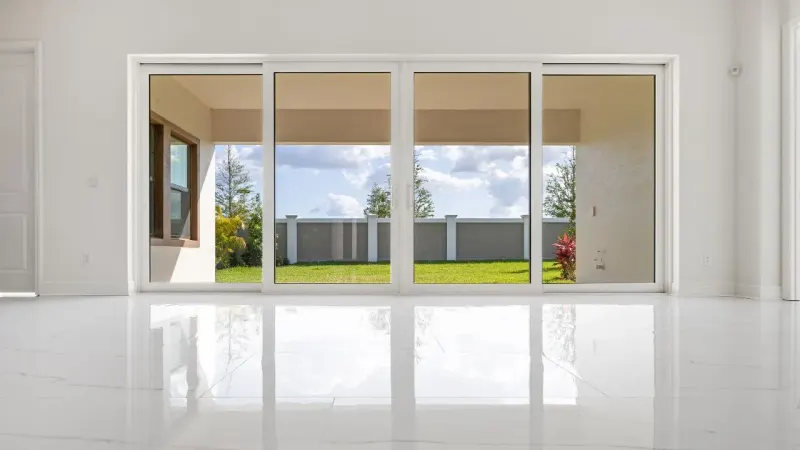
With tile this big, there might be only four or five full tiles across a room. Start in the wrong place and you end with a two-inch sliver along the most visible wall. I lay out every large format floor on paper first, then dry-lay the first rows in the house, so the cuts land under the cabinets and along the least visible wall and the full tiles run toward the sliders where the light comes in.
Two more rules for 24x48. A 50 percent brick offset, where each tile is centered on the one below, is where lippage shows most, because the middle of a big tile is often slightly higher than its ends. We stagger at a third instead, which the tile makers recommend. And we use a leveling system, the little clips and wedges that hold neighboring edges flush while the mortar cures, on every single tile, not just the tricky ones.
- Dry layout first, so slivers never land where you look
- One-third offset on plank and 24x48 tile, not a 50 percent brick pattern
- Leveling clips on every tile until the mortar sets
- Movement joints at doorways and against the walls so the floor can breathe
Polished, matte or wood-look: what holds up in a Land O' Lakes home
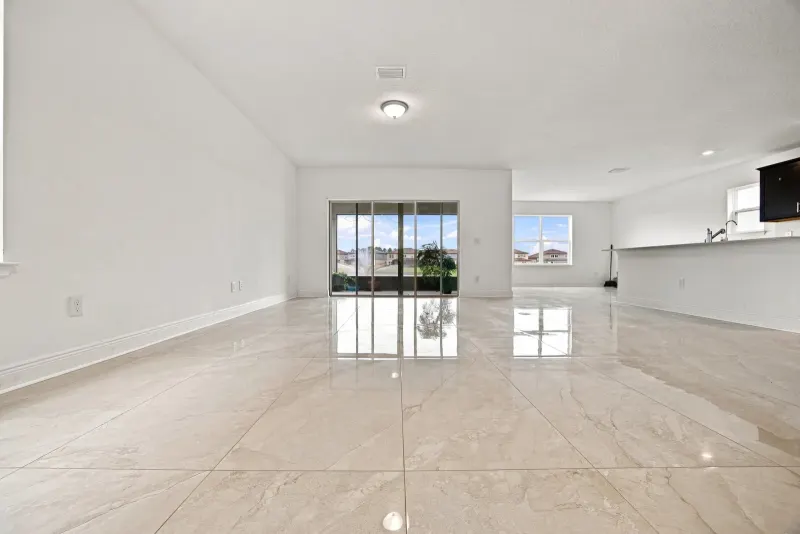
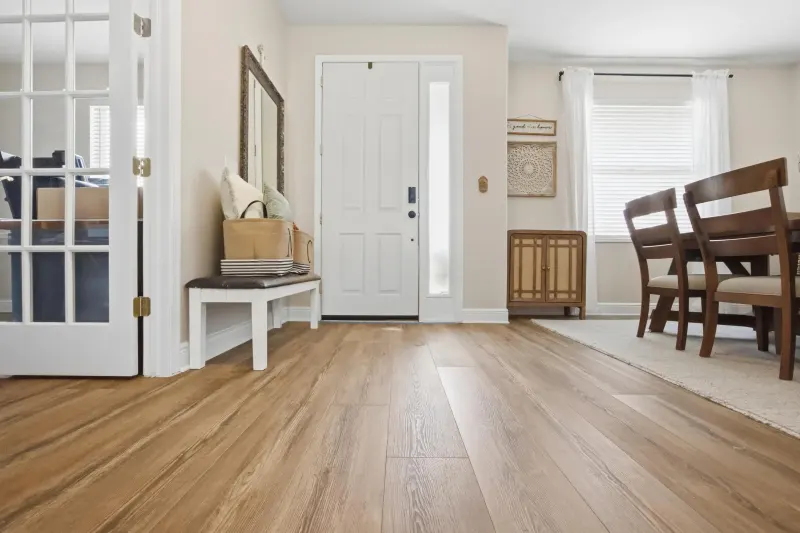
Polished porcelain is the showstopper, and in a great room with sliders onto the lanai it is hard to beat. It does show every bit of dust and it is slick when wet, so I talk families with small kids or an older parent through a matte or a lightly textured finish for the same look with more grip. Wood-look porcelain plank gives you the warmth of hardwood with zero worry about water, which is why it is going into so many kitchens and bathrooms here.
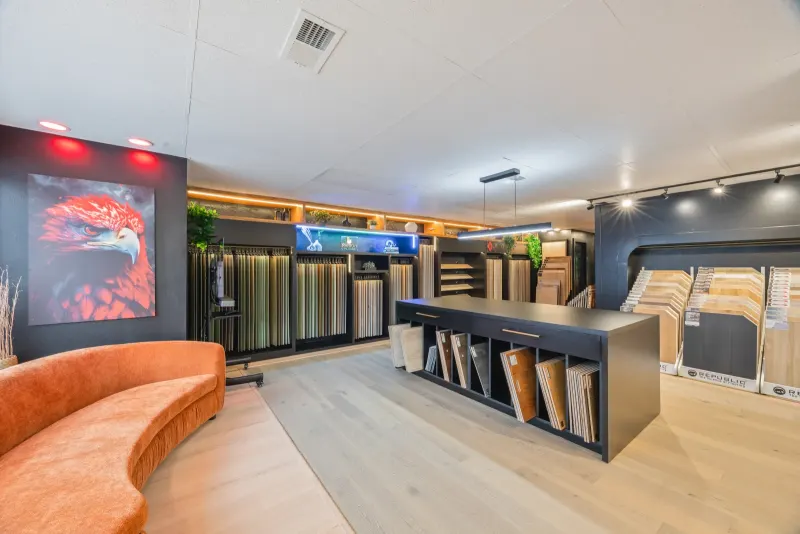
Whichever you pick, buy it through our Lutz showroom or supply your own. Either way, the tile gets its own line on the quote, and the labor and prep sit on their own lines, so you can see exactly what the floor costs and what the work costs.
How long it takes and what to expect
A large format tile floor is not a one-day job, and anyone who tells you it is will skip the step that matters. For a typical Land O' Lakes great room and kitchen, plan on a day for removal and haul-away, a day for slab prep and leveling, two to three days of setting, and a day for grout and cleanup. You can walk on it the day after grout. Furniture goes back a day after that.
I measure every job myself and I am on the floor for the layout. The setting is done by the same long-time tile installers who have worked with me for years, and the installation carries Red Eagle's own warranty on top of the tile manufacturer's.
Thinking about big tile this winter?
Text a photo of the room to (337) 333-2453 and tell me the tile size you have in mind. I will give you an honest ballpark and tell you what the slab in your neighborhood usually needs. If it makes sense, we set up a free in-home measurement anywhere in Land O' Lakes, Lutz or Wesley Chapel, and you get an itemized written quote. You can also see the large format options in person at the showroom, 108 Flagship Dr in Lutz, by appointment.